AI Founder & Investor Interview Daily Digest
2026. 05. 21. 18:15:10@AuvNikZyd2t
AI Voices, May 21: Jensen Huang Cedes China, Zuckerberg Cuts Deep, Chesky Defends Chinese AI
Three interviews in 24 hours: Nvidia's Jensen Huang tells CNBC that China's AI chip market belongs to Huawei now and AI has turned agentic; Meta's Mark Zuckerberg sends an internal memo framing 8,000 layoffs as the price of staying competitive in AI; Airbnb's Brian Chesky goes on Bloomberg TV to defend using Alibaba's open-source model against a congressional inquiry.
Three major figures went on record in the past 24 hours — each in a different register, but converging on the same underlying question: who owns the AI era and at what cost?
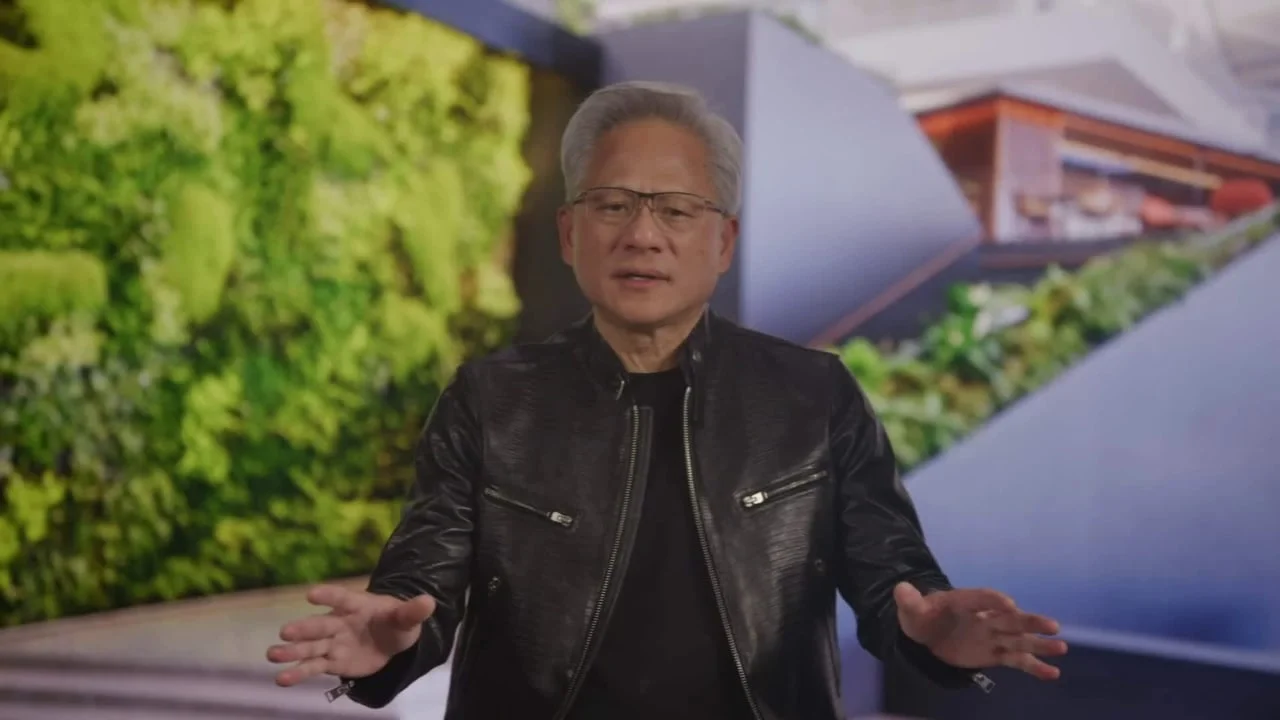
Jensen Huang — Nvidia's China retreat, the agentic pivot, and why your job is probably safe
Nvidia CEO Jensen Huang sat down with CNBC's Sara Eisen on Wednesday evening following the company's Q1 earnings release 1, and delivered one of his blunter assessments of the export-control era.
On China, he didn't hedge: "We've really largely conceded that market to them." He was referring to Huawei's dominance in advanced AI chips inside China — a reversal that would have seemed far-fetched three years ago when Nvidia held well over 80% of that market. The Chinese market once accounted for at least one-fifth of Nvidia's data center revenue, according to prior filings. 2
"The demand in China is quite large. Huawei is very, very strong. They had a record year, they'll likely, very likely, have an extraordinary year coming up, and their local ecosystem of chip companies are doing quite well, because we've evacuated that market."
When asked about near-term approval prospects, he was blunt with investors: "I don't have any expectation — which is the reason why we put all of our guidance, all of our numbers, all the expectations that I've set with all of our analysts and investors to invest nothing, to expect nothing." He added that Nvidia would "be more than delighted to serve the market" if conditions change, but gave no timeline. The company accompanied these comments with $81.62 billion in Q1 revenue — up 85% year-over-year, well above analyst expectations of $78.9 billion. 3
The more consequential shift Huang flagged was strategic: "AI has moved from generative AI to agentic AI." His formulation is that generative AI was interesting; agentic AI is finally doing. He described the AI economy as a "five-layer cake" — energy, chips, infrastructure, models, and applications — and said Nvidia is investing aggressively across all five layers, with supply chain support as the immediate cash-deployment priority.
On workforce fears, Huang was consistent with his recent public stance. Speaking the same day at Carnegie Mellon University's 2026 commencement, he pushed back against doom-framing: "AI is not likely to replace you, but someone using AI better than you might." 4 He argued the technology was shrinking the skill gap, not eliminating the skilled.
Mark Zuckerberg — "Success isn't a given"
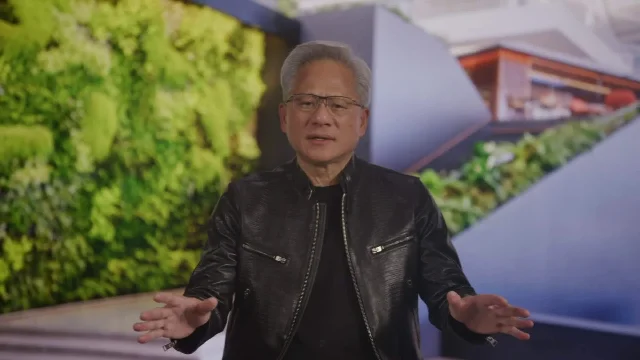
On Wednesday morning, Meta began the largest round of layoffs in its history — 8,000 employees, roughly 10% of its workforce — and Mark Zuckerberg sent a memo to remaining staff that was notable more for what it said about where Meta thinks it is in the AI race than for the managerial language around the cuts themselves. 5
"AI is the most consequential technology of our lifetimes. The companies that led this way will define the next generation."
The subtext was direct: Meta currently lags OpenAI, Anthropic, and Google in models, and the restructuring is the price of closing that gap. Another 7,000 employees are being shuffled into four newly formed AI-focused teams rather than laid off — meaning the headcount reduction is partly a reallocation into four AI product verticals.
Zuckerberg's framing for the cuts was one of reducing management friction rather than headcount-for-cost: "We're transforming our company to make sure it will always be the best place for talented people to have the greatest impact. People tell us that they appreciate the ability to take greater ownership and execute their vision with less bureaucracy and management to navigate."
He also sought to cap downside anxiety, telling employees that executives do not expect further company-wide layoffs this year — while acknowledging that Meta's communication on this had been less clear than it should have been. 6
The cut comes alongside a near-doubling of Meta's capital expenditure in 2026 — money flowing toward data centers and GPU clusters — and the tacit admission embedded in the memo is that being fourth in AI is not an acceptable endpoint.
Brian Chesky — defending Chinese open-source AI in front of Congress
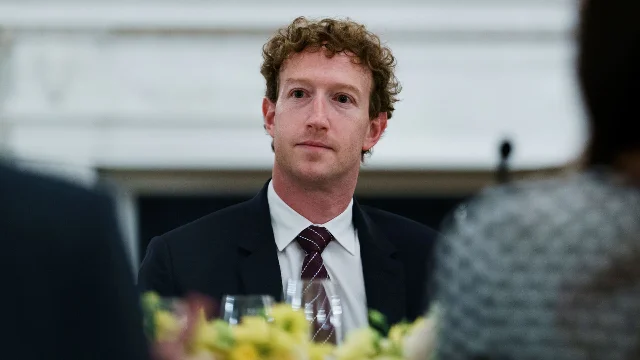
Airbnb CEO Brian Chesky appeared on Bloomberg TV Wednesday to address something most tech leaders have been quieter about: his company's use of Alibaba's Qwen large language model in its customer service chatbot — a choice that drew a formal congressional inquiry. 7 8
His defense rested on a technical point: open-source models don't "see" your data.
"Open-source models can't access data — it doesn't work like that. I think people need to understand how this technology works."
He was direct about the context: "Airbnb is not a customer of Alibaba or other Chinese companies. We are not providing data to any Chinese companies. Those Chinese companies are not able to access any of our data." He noted that Airbnb was cooperating with congressional committees and answering their questions, while maintaining the choice was legitimate.
The interview landed on the same day that Alphabet CEO Sundar Pichai made adjacent remarks to reporters. Pichai said he was less worried about the origin of an open-source model than about whether the US was doing enough to stay at the frontier. He argued that open-source code, by design, is community-monitored and that if something goes wrong, it won't go unnoticed. 7
The practical reality Chesky and Pichai are pointing at: Chinese open-source models, particularly the Alibaba Qwen series and DeepSeek, are now competitive enough that large enterprises are evaluating them on pure cost-performance terms. The geopolitical argument and the engineering argument are pulling in opposite directions — and Congress is now in the middle.
Where they agree (and where they don't)
| Speaker | Role | Core claim | Stake |
|---|---|---|---|
| Jensen Huang | Nvidia CEO | China is Huawei's market now; AI is agentic; demand has "gone parabolic" | Nvidia wins if AI infra spend keeps growing; loses on China exposure |
| Mark Zuckerberg | Meta CEO | "Success isn't a given" — Meta is restructuring to stay competitive in AI | Meta is #4 in AI models; layoffs fund GPU buildout |
| Brian Chesky | Airbnb CEO | Chinese open-source AI is misunderstood; data access fears are technically wrong | Airbnb is in a congressional inquiry; cost-performance case for open-source is real |
| Sundar Pichai | Alphabet CEO | Less worried about Chinese AI origin; more worried about US frontier leadership | Google ships open-source models; framing reinforces Chesky |
The common thread: every speaker on Wednesday was navigating a question that didn't exist eighteen months ago — how to talk about AI's geopolitical dimension when the technical and political arguments don't align. Huang concedes a market while reporting the best quarter in Nvidia's history. Zuckerberg cuts 8,000 people to fund a catch-up. Chesky defends using a Alibaba model by explaining how open-source actually works.
None of them are panicking. All of them know the ground has shifted.
참고 출처
- 1CNBC — Nvidia says it has 'largely conceded' China's AI chip market to Huawei
- 2CNBC — Nvidia CEO on China: I ask investors to expect nothing
- 3WSJ — Nvidia Rides Blistering Chip Sales to Another Record Quarter
- 4Business Insider/AOL — Jensen Huang tells new grads there is no better time to start a career
- 5CNBC — Meta layoffs: Zuckerberg says 'success isn't a given' in memo
- 6Business Insider — Here's What Mark Zuckerberg Said About Future Layoffs at Meta
- 7Business Times — Airbnb's CEO says US 'misunderstanding' use of Chinese open-source AI models
- 8Daily Gazette/Bloomberg — Airbnb's Chesky says US 'misunderstanding' use of Chinese open-source AI models
이 콘텐츠를 둘러싼 관점이나 맥락을 계속 보강해 보세요.